By a snarky, unpaid, overcaffeinated church planter just trying to make disciples and not lose his mind.
Let me preface this entire post by saying: I have no idea what I’m doing. There, I said it. I’m a church planter, not a wizard. I don’t have a seminary diploma with magical powers, and I wasn’t handed a secret scroll titled, “How to Plant a Church Without Losing Friends or Your Soul.”
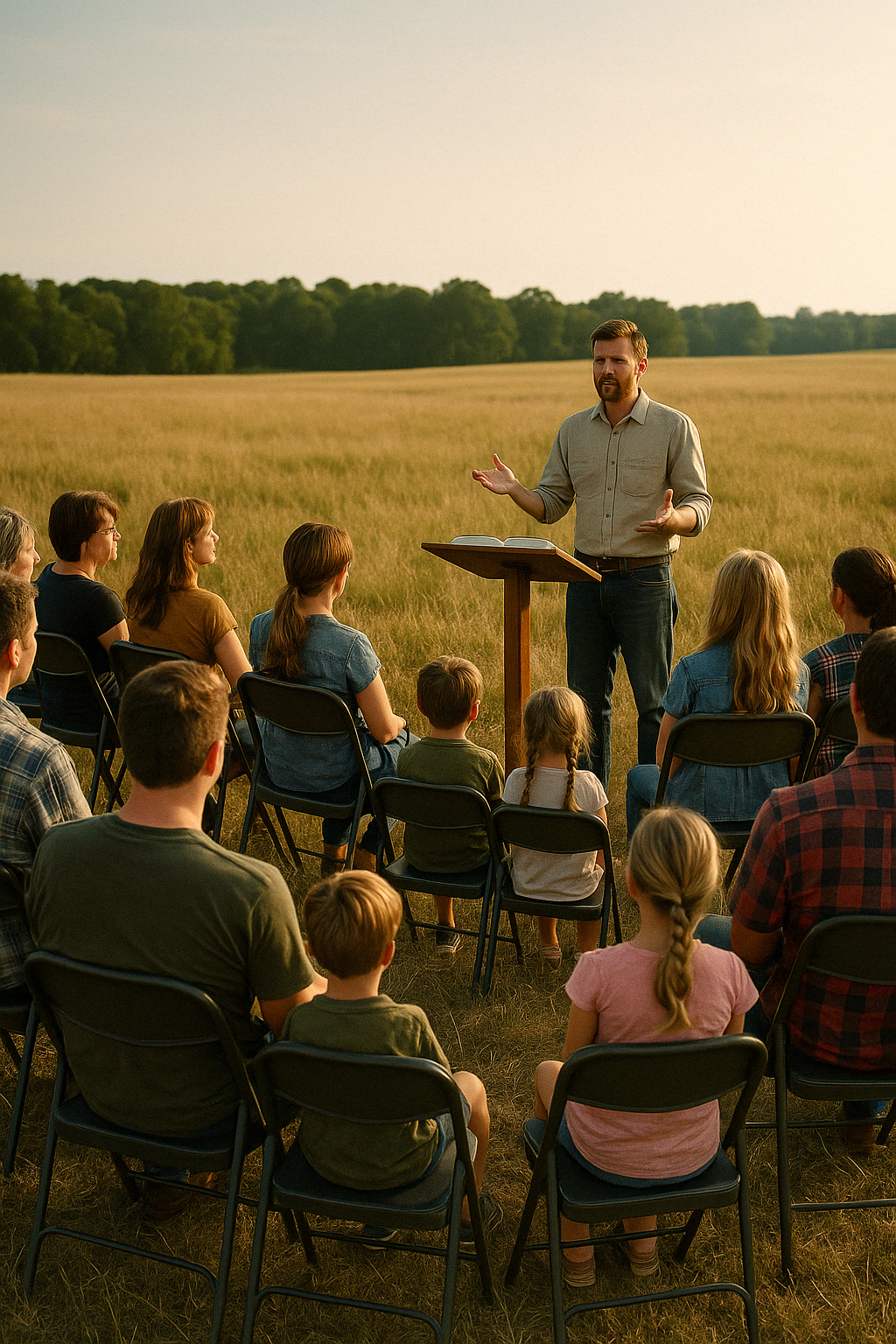
What I do have is a reformed backbone, a heart set on making much of Christ, and a ragtag group of believers who gather every week under the wide Texas sky at a little thing we call Redemption Ranch. We’re just over a year old—still toddling, still stumbling, still learning how to walk. But God has been faithful, and this journey has taught me a few things that the church growth books forgot to mention.
So here they are. Five brutally honest, occasionally snarky lessons from the trenches of planting a church in real life—not in a workbook.
1. Membership Structures Are Overrated—Be a Part of the Community
Look, I get it. The word “membership” sounds holy and official. It’s got that nice Robert’s Rules of Order vibe that makes Type A Christians feel spiritually secure. But here’s the thing: a name on a roster isn’t a disciple.
I’ve been around long enough to see how churches—especially in our reformed, regulation-loving wing of Protestantism—turn membership into a weird mix of corporate bureaucracy and exclusivity. Background checks. Interviews. A two-year probationary period. Blood samples (okay, maybe not that one). And for what? Half of them never show up again.
In Acts, the early church didn’t pass out laminated membership cards. They devoted themselves to the apostles’ teaching, fellowship, breaking of bread, and prayer. They showed up. They belonged.
At Redemption Ranch, we’ve chosen to build a community before building a roster. We vet those who want to serve. We disciple people before handing them a mic. But we don’t treat commitment like joining a gym. You’re not here to meet a quota. You’re here to follow Jesus with other people who are just as messed up as you.
Yes, there’s a time for structure. Yes, there’s a time to recognize elders, deacons, teachers, and trusted leaders. But that structure should flow out of real community, not precede it. People don’t stay because they signed a form—they stay because they’re loved.
I’ve seen people stick around through storms, disagreements, and deep hardship—not because of a policy, but because of people. Because someone called when they missed service. Because someone helped them move. Because someone showed up with tacos and prayer.
And let’s be honest—Jesus didn’t tell Peter to make sure the fishing net was properly notarized. He said, “Feed my sheep.” So we do.
2. Not Taking from the Pot (An Unpaid Pastor) Makes Things Simpler
Let me start with a disclaimer: if you are a paid pastor—awesome. Get paid. The laborer is worthy of his wages (1 Timothy 5:18). This is not a rant against compensated ministry. This is a testimony of what it’s like to do it without that paycheck.
I work a full-time job. I’m up early and often go to bed late. I prep sermons on my lunch break, counsel people after work, and field phone calls on weekends. I don’t get paid for it. And you know what? I wouldn’t trade this season for anything.
Why? Because I’ve tasted a kind of pastoral freedom I never knew existed.
There’s no pressure to appease certain givers. No temptation to water down the Word to make sure the offering doesn’t dip. No unspoken sense that I’m performing for a salary.
I preach what God puts on my heart, straight from the text, no polish, no sugarcoat. I don’t need to sell anyone a vision or emotionally manipulate people into giving. I simply teach the truth and let the Spirit do what the Spirit does.
That’s not to say it’s easy. Financially, it’s hard. Spiritually, it’s refining. And logistically, it’s a juggling act that sometimes drops balls. But it’s also real. Raw. Sanctifying.
And it teaches the congregation something too.
They see sacrifice. They see passion unhitched from paycheck. They see someone who shows up not because it’s a job—but because it’s a calling.
I don’t plan on being unpaid forever. But in this season, I’m thankful. Because there’s nothing quite like being untethered from fear of man and funded by nothing but the grace of God.
3. Killing Church Politics Is Glorious
Have you ever been in a church where “Mr. and Mrs. Smith” run everything because they give the most? Yeah. Me too.
At Redemption Ranch, we buried that mess on day one. Our Church was acutally born out of this situation.
There’s no place for ego-driven influence or tithe-based clout. We’re not a country club. We’re not a nonprofit corporation. We’re a flock. A family. And in this family, your wallet doesn’t give you a louder voice.
We don’t have a finance committee that “guides” the vision of the church (translation: makes sure the pastor doesn’t offend anyone rich). We don’t send out end-of-year giving statements with passive-aggressive letters about meeting the budget.
We just… trust God.
We give cheerfully. We give quietly. We use what comes in for what matters.
The absence of politics has created space for joy. For generosity without manipulation.
No pressure. No drama. No battles over new carpet colors or bulletin fonts.
Just people. Just Christ. Just the Word.
4. Don’t Build a Program—Build a People
Church programs aren’t evil. But they’re not the goal. Discipleship is.
I’ve sat through meetings where churches debated for hours over the details of their next event—theme colors, snack options, T-shirt designs. And not once did anyone ask: “Will this help someone love Jesus more deeply?”
At Redemption Ranch, we don’t run programs. We run hard after Christ.
That means we disciple in living rooms, not classrooms. We pray around fire pits, not just in formal services. We have late-night, uncomfortable conversations with people who are drowning in sin—not because we want to check a box, but because we love them.
And guess what? It’s messy. It’s slow. It’s nonlinear. It doesn’t scale well. But it’s real.
Programs can create attendance. Discipleship creates maturity.
And I’ll take five spiritually hungry, painfully honest believers over fifty passive program attendees any day.
We’re not trying to be efficient. We’re trying to be faithful.
5. You Don’t Need a Building to Be a Church (Just Jesus and People Who Show Up)
This might be the most liberating lesson of all.
The church isn’t where you gather—it’s why you gather.
Our earliest services were in teh middle of a front yard in the country. When it rains, we are in a tool packed garage. Sometimes around dinner tables. We didn’t have fog machines, kids check-ins, or anything official". But we have Bibles, prayer, and each other.
And Jesus showed up. Every. Single. Time.
You don’t need a steeple to preach the gospel. You don’t need pews to hear from heaven. You don’t need a stage to lift your hands and sing.
You just need people who love Jesus enough to show up and stay.
So stop waiting for the perfect building, the perfect funding, the perfect launch team.
Open your home. Open your Bible. Open your mouth.
And let the Church be the Church.
Final Thought
I’m not writing this from a place of expertise. I’m writing it with dirt under my nails, exhaustion in my bones, and joy in my soul.
Redemption Ranch isn’t perfect. We’re small. We’re scrappy. We’re still learning. But we’re seeing God move—not through programs, politics, or polished performances—but through faithful preaching, genuine relationships, and Spirit-empowered perseverance.
If you’re planting a church, take heart.
You don’t need flash. You don’t need fame. You don’t need to be impressive.
You just need to be faithful.
Let Jesus build His Church. You just show up and hold the line.
And maybe—just maybe—you’ll get to see what happens when a group of nobodies gather around a Somebody and believe He’s enough.
Thanks for reading.


