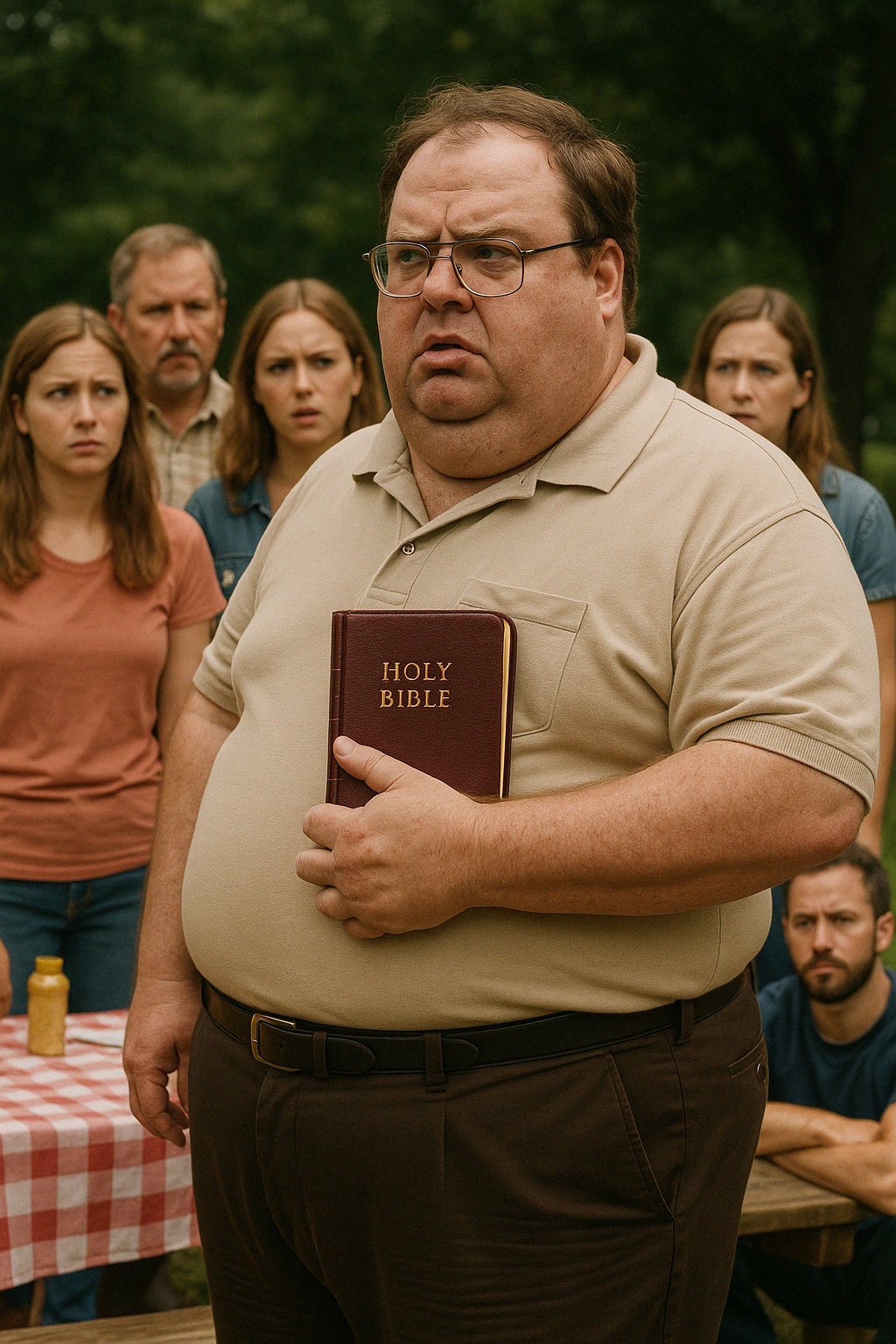
Because “I can do all things” doesn’t mean you’re about to nail that CrossFit PR, Becky.
Let’s talk about one of the most annoying, theologically lazy, spiritually embarrassing trends in modern Christianity: taking the Bible out of context to prove a point.
Because apparently, we’ve decided that Scripture is a divine meme generator—one-liners ripped from their chapters and slapped onto coffee mugs, t-shirts, Instagram captions, and political arguments like bumper stickers for your ego. And the worst part? Most people doing it genuinely think they’re being biblical.
Spoiler: quoting half a verse doesn’t make your opinion holy. It just makes you dangerous with a sword you don’t know how to wield.
But why does this even matter? Isn’t God’s Word powerful no matter what?
Sure—but only when used as He intended. The Bible isn’t magic. It’s not a book of charms you rub for good luck. It is God’s self-revelation, and it carries authority, not suggestions. Taking verses out of context turns God’s truth into a tool for self-worship. And friend, that’s not Bible reading—that’s Bible abuse.
God’s Word is meant to shape us, not be shaped by us. We are not the authors. We are the readers. The submissive ones. The ones who bow the knee. And every time we treat Scripture like a spiritual vending machine, picking out what we want while ignoring the rest, we dethrone God and enthrone our egos.
So let’s dive into the biggest offenders. Grab your Bible. Or better yet, open the actual book instead of that pastel devotional you got at Hobby Lobby. We’ve got context to recover and theological garbage to throw out.
“I Can Do All Things Through Christ Who Strengthens Me” (Philippians 4:13)
Context: Paul is in prison. Let me repeat that. Prison. Cold, probably hungry, definitely not in an F-150 revving up for his next gym set.
What Paul was saying is that he had learned to be content in any circumstance—whether starving or full, free or in chains. It’s a verse about enduring suffering with the strength Christ provides, not about crushing your goals or manifesting your dreams.
So no, Karen. This verse does not guarantee your promotion. It promises contentment in lack.
“Where Two or Three Are Gathered…” (Matthew 18:20)
This one is a small group favorite. You’ve heard it: “Guys, Jesus is here! There are more than two of us!”
Cool story. But that’s not what it means.
Jesus was talking about church discipline. You know, that awkward, rarely-used practice where you lovingly confront someone in sin and, if necessary, involve the church.
Not exactly warm-fuzzy devotional material, huh?
He was saying, “When you go through the hard, heartbreaking, confrontational work of keeping each other accountable, I’m with you in it.”
So unless your Bible study is about to rebuke a brother in sin, maybe don’t quote this verse.
“Judge Not, Lest Ye Be Judged” (Matthew 7:1)
This one gets used more than “Jesus loves you.”
Someone dares to call out sin, and boom—“Don’t judge me! Jesus said so!”
Did He, though? Or are you just hoping no one holds you accountable?
Jesus was warning against hypocritical judgment, not all judgment. If you read literally two more verses, He says not to throw pearls before swine and to take the speck out of your brother’s eye after you deal with your own plank. That’s not “no judgment.” That’s humble judgment.
Discernment is biblical. Accountability is biblical. Your “don’t judge me” deflection? Not so much.
“Plans to Prosper You…” (Jeremiah 29:11)
Oh, look. Another verse we’ve kidnapped, duct-taped, and dragged into our self-esteem theology.
Jeremiah 29:11 was written to Israel in exile. God was promising that after 70 years of discipline in Babylon, He would bring them back. Seventy. Years.
So unless you’re currently living under divine judgment for centuries of rebellion, maybe hold off on claiming that verse for your wedding vision board.
It’s not about your dream job. It’s about God’s faithfulness to His covenant people—even in judgment.
“Be Still and Know…” (Psalm 46:10)
This verse gets used like God’s way of saying “treat yourself.”
But Psalm 46 isn’t a call to slow down with a latte and a scented candle. It’s a war psalm. It’s about God crushing nations, ending wars, and being exalted as sovereign over all.
“Be still” is more like, “Stand down. Shut your mouth. Know that I’m God.”
It’s not a spa day—it’s a battlefield.
Why Context Matters (A.K.A. Why This Isn’t Just About Your Feelings)
Here's the thing: The Bible is not about you. It’s about God.
From Genesis to Revelation, Scripture is the unfolding revelation of who God is, what He has done, and what He requires of us. When we hijack verses to validate our feelings, fuel our ambition, or settle our Twitter beefs, we aren’t just being sloppy—we're being sinful.
The Bible is God-breathed (2 Timothy 3:16). It is profitable for teaching, correction, and training in righteousness—not for turning into inspirational posters and coffee shop sermons that leave people feeling good and staying lost.
Taking Scripture out of context isn't just poor exegesis. It's rebellion. It's saying, “God, I know what You meant, but I’m going to make it work for my agenda instead.” And if that doesn’t make you shudder, it should.
We don’t stand over Scripture. We sit under it.
We don’t bend it to our narrative. It bends us.
We don’t get to cherry-pick verses to win arguments. We’re supposed to let the whole counsel of God shape us (Acts 20:27).
Let me put it plainly: When you take the Bible out of context to make a point, you’re not proving your righteousness—you’re proving your ignorance.
Final Word: Don’t Be a Bible Butcher
The Bible is not a buffet. You don’t get to grab what feels good and leave the vegetables. You don’t get to cherry-pick verses to win arguments, slap a holy badge on your bad decisions, or decorate your timeline.
God’s Word is meant to be digested whole, not chopped up and made into TikTok theology.
We need the whole story—the warnings and the promises. The judgment and the mercy. The law and the gospel. The Old Testament and the New.
Because when we understand the context, we begin to understand the character of God. And that’s the point.
So next time you want to quote a verse—read the chapter. Better yet, read the book. Read who it’s written to. Read the genre. Read the purpose.
Because God’s Word is sacred. And twisting it to fit your narrative isn’t clever—it’s blasphemous.
Pick up the sword. But for heaven’s sake, stop swinging it like a toddler with a lightsaber.
Instead, wield it like it’s meant to be used: carefully, reverently, and boldly.
Because when we take Scripture seriously, we start taking God seriously. And that’s the kind of Christian the world desperately needs.
Thanks for reading.


