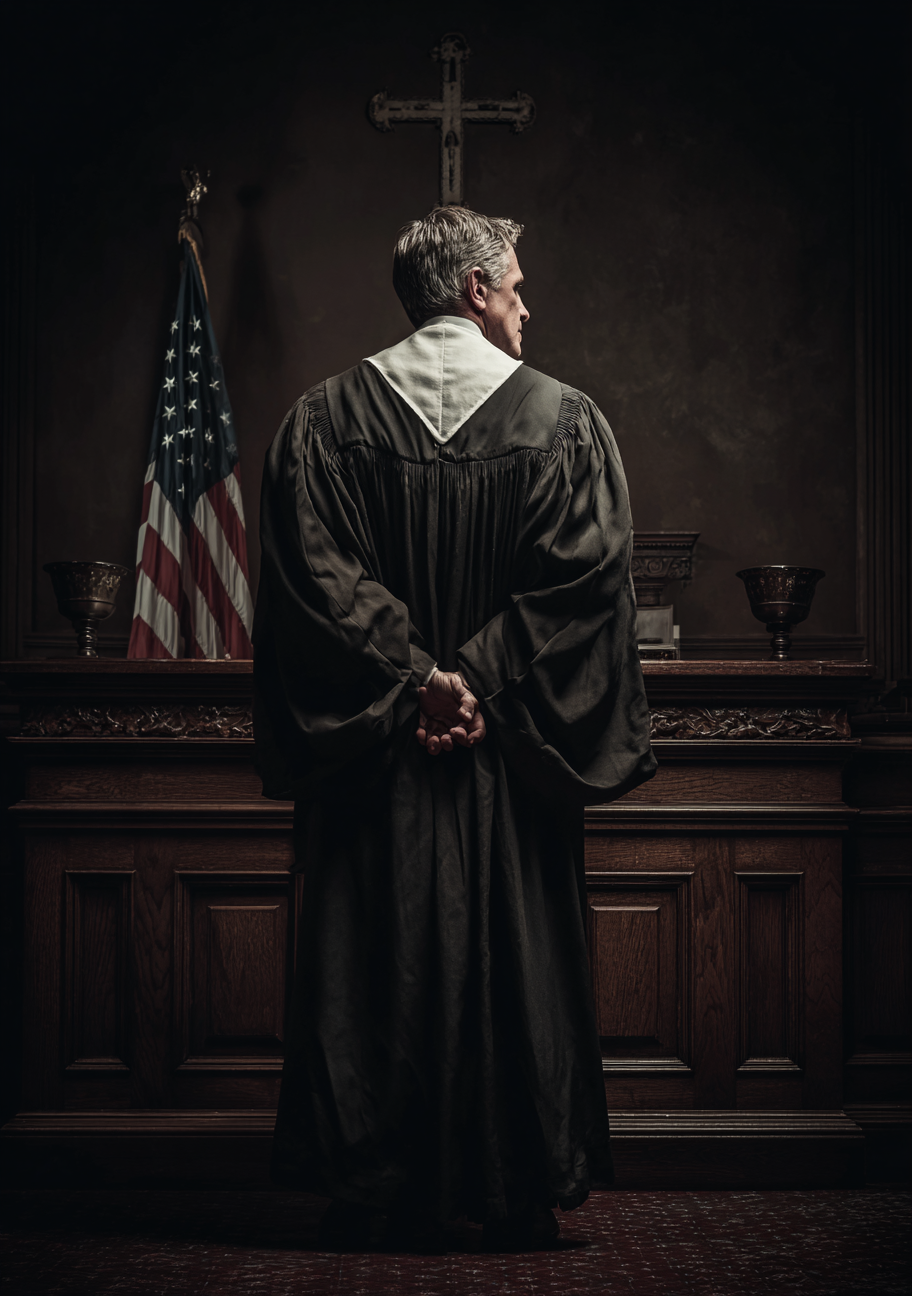
Christian Nationalism, July 4th, and the Battle for America’s Soul
Ah, July 4th.
The day America dusts off her patriotic playlist, grills half a cow, sets off government-funded explosives, and pretends she remembers what liberty actually is.
It’s the day we slap red, white, and blue on everything from hot dog wrappers to our Instagram stories, sing "God Bless America" with beer in hand, and shout about freedom while most of our neighbors couldn’t name the First Amendment if it slapped them with a sparkler.
But deeper than the fireworks, deeper than the nostalgia, and deeper than the overpriced lawn chairs made in China, lurks a far more pressing question:
What does it actually mean to be a "Christian nation"?
And even more: should we want that?
Do we really want Jesus to be King over America, or just chaplain to the American dream? Do we want biblical law shaping our legal system, or just "faith-friendly" slogans on our coffee cups? Do we want revival or just religious branding?
Because here’s what’s happened: a term that used to terrify liberal journalists and make coastal elites foam at the mouth—Christian Nationalism—is suddenly on everyone’s lips.
From your aunt who just discovered Gab.com to Reformed Twitter bros quoting Doug Wilson between deadlifts, Christian Nationalism is having a moment.
And like all "moments," it’s bringing out the grifters, the gatekeepers, the glory-seekers, and the genuinely confused.
So let’s cut through the noise. Let’s lay it bare. Let’s talk about:
- What Christian Nationalism actually is
- What the Wilsonian, postmillennial, covenantal strain of it hopes to accomplish
- What’s glorious, what’s dangerous, and what’s just plain stupid
- And why the phrase "Make America Christian Again" should be embroidered on a flag, a pulpit, and maybe your forearm.
Why Now?
Because America isn’t just drifting from her Christian heritage. She’s sprinting from it with demonic glee.
We’ve gone from George Washington quoting the Psalms to the President of the United States officiating same-sex weddings in the Rose Garden. We’ve gone from public school prayer to Drag Queen Story Hour. We’ve gone from "In God We Trust" to "In Government We Grovel."
And the church? Oh, she’s too busy trying to be relevant. Too worried about being liked. Too afraid to say the word "repent."
So Christian Nationalism enters the scene like a theological bar brawl. Rough around the edges. Misunderstood. And totally necessary.
It says, "Jesus is Lord of everything. Yes, even your laws. Even your legislature. Even your Constitution."
It says, "No, we’re not content with private Christianity. We want Christ to reign publicly."
It says, "We’re tired of being told to keep our faith quiet. We’re here to plant a flag."
That scares people. Good. Truth is, it should. Because a faith that doesn’t confront the idols of the age is not faith—it’s cowardice in a choir robe.
Why This Blog?
Because Christians are confused. They’re hearing "Christian Nationalism" and picturing some frothing, flag-waving theocracy that wants to jail atheists and burn witches.
Or they’re hearing it and thinking it’s just voting Republican and slapping a Jesus fish on your truck.
Both are wrong. Both are lazy. Both miss the point.
This blog is for the Christian who knows:
- The gospel is not just a private therapy session
- The Lordship of Christ applies to nations as well as hearts
- The Great Commission is public, global, and unrelenting
It’s for the Christian who’s tired of watching rainbow flags fly where the cross used to hang. It’s for the Christian who believes Jesus deserves more than our Sunday mornings—He deserves our legislation, our culture, our schools, and our laws.
But it’s also for the Christian who wants to think clearly. Who doesn’t want to trade one idol (secularism) for another (nationalism). Who wants a biblical vision of Christ’s kingship without selling out the gospel for political dominance.
So buckle up. Because in the next sections, we’re going to:
- Define Christian Nationalism (yes, really define it)
- Dive into the Doug Wilson, postmillennial, theonomic brand of it
- Weigh the strengths and weaknesses
- Call out the heretical nonsense
- Reclaim the phrase "Make America Christian Again" not as a partisan slogan, but as a rallying cry for reformation
Because here’s the thing:
Every knee will bow. Not just in heaven. Not just in church. But in Congress. In the courtroom. In the Oval Office.
"The kings of the earth set themselves, and the rulers take counsel together, against the Lord and against his Anointed... He who sits in the heavens laughs... I have set my King on Zion, My holy hill." (Psalm 2)
Jesus doesn’t need our votes. But He demands our obedience. And any nation that refuses to kiss the Son will perish in the way.
So let’s dig in. Let’s fight smart. Let’s fight biblical. And for heaven’s sake...
Let’s Make America Christian Again.
Defining Christian Nationalism (Without the Strawmen)
Let’s clear the smoke.
Because if we’re going to make the claim that “Make America Christian Again” is a good, righteous, biblically warranted goal—we have to first define our terms.
And right now, “Christian Nationalism” means a thousand different things depending on who’s tweeting, which journalist is panicking, and what denomination is melting down over Doug Wilson’s facial hair.
So let’s slow down, sharpen the blade, and carve out a definition that’s both theologically grounded and impossible to ignore.
What Christian Nationalism Is NOT
Before we define it, let’s bury a few corpses:
- It is NOT white nationalism with a Bible verse taped to it. That’s a lie crafted by progressive academics and lazy journalists who think every traditional Christian is five minutes away from goose-stepping through the Capitol.
- It is NOT a theocracy where unbelievers are jailed for skipping church. That’s a fever dream cooked up by people who think Psalm 2 is hate speech.
- It is NOT about worshiping America, baptizing conservatism, or confusing Jesus with Uncle Sam. That’s idolatry, and we’ll swing hard at it later.
- It is NOT a shortcut to revival. You don’t convert sinners by waving flags. You convert them by preaching Christ and Him crucified. The state can’t regenerate a single soul.
So if you’re looking for a “Christian” version of Gilead, take it somewhere else. We’re not here to cosplay Old Testament Israel.
We’re here to submit every square inch of American life to the Lordship of Christ—because He owns it already.
So What Is Christian Nationalism?
In its clearest, most biblical form:
Christian Nationalism is the belief that Jesus Christ is Lord over every nation—including America—and that civil governments should acknowledge, submit to, and conform to His rule in their laws, policies, and public life.
It doesn’t mean forcing conversions. It doesn’t mean banning all non-Christians. It means recognizing that Christ has authority over nations, not just individuals. And that national life should reflect that.
“All authority in heaven and on earth has been given to Me. Go therefore and make disciples of all nations...” (Matthew 28:18–19)
Notice: Jesus doesn’t just tell us to disciple individuals. He says nations. That has political consequences.
Biblical Support for Christian Nationalism
You can try to erase it, but Scripture won’t let you:
- Psalm 2: The kings of the earth are commanded to submit to the Son—or perish.
- Romans 13: The governing authority is God’s servant—not neutral, not autonomous.
- Isaiah 60 & Revelation 21: The nations bring their glory into the Kingdom of God.
- Proverbs 14:34: Righteousness exalts a nation, but sin is a reproach to any people.
The pattern is consistent: God rules nations, not just private hearts. And when those nations rebel, He judges them. When they repent, He blesses them.
That’s not “theocracy.” That’s biblical reality.
Historic Christian Nationalism (Before It Was a Buzzword)
Let’s not act like this is new.
The Puritans came to these shores with a Bible in one hand and a covenantal worldview in the other. They believed God wasn’t just interested in private holiness—He demanded public righteousness.
Early colonial charters? Christian. Founding documents? Dripping with theological assumptions. National motto? Still says “In God We Trust.”
Were they perfect? Of course not. But they understood something we’ve forgotten:
There is no such thing as a neutral public square.
Either Christ is King—or Caesar fills the vacuum.
Key Tenets of Biblical Christian Nationalism (Doug Wilson Style)
Doug Wilson (say what you want) has done more than anyone else to articulate a bold, postmillennial, biblically muscular vision of Christian Nationalism. Here’s the distilled version:
- Jesus is Lord of everything—not just church, but state, family, economy, art, education, you name it.
- Nations are discipled, not merely individuals. We are to bring law and culture under the obedience of Christ.
- The gospel changes hearts, but law restrains evil. Good laws are not salvific, but they are necessary.
- The state is not secular. There is no neutrality. Every law has a theological foundation.
- The church leads spiritually. The sword belongs to the state, the keys belong to the church, and both answer to King Jesus.
This isn’t about imposing Christianity by force. It’s about removing false gods from the throne and putting the rightful King back in place.
Why the Left Hates It (And Why That’s a Good Sign)
The moment you suggest that Christ should be Lord over anything other than your personal prayer life, the left melts down.
You’ll be called:
- Fascist
- Theocratic
- White supremacist
- Taliban
- Christian nationalist (with a sneer)
Good. Because when a pagan culture celebrates drag queens and dismembers babies, being hated by it is a badge of honor.
“If the world hates you, know that it has hated Me before it hated you.” (John 15:18)
They’re not angry because you want righteousness. They’re angry because you want Christ to reign.
It’s Not About Power—It’s About Obedience
We’re not chasing power for power’s sake. We’re chasing obedience.
The Great Commission isn’t just personal. It’s political. It’s cultural. It’s cosmic.
We don’t want America to become “Christian” so we can dominate our enemies. We want America to become Christian so we can honor our God.
Because He’s already in charge. He already owns this land. We’re just finally saying so.
A Deep Dive into the Doug Wilson Model
Let’s talk about the man, the myth, the lightning rod: Doug Wilson.
The mere mention of his name causes charismatic pastors to hyperventilate, mainline clergy to melt, and Twitter to implode into a pile of beard envy and half-read blog posts.
But love him or loathe him (and for the record, we’re not here to canonize or condemn), you can’t ignore the fact that Wilson has shaped the Christian Nationalism conversation more than any other modern voice.
So let’s do the hard work. Not to blindly endorse. Not to reflexively reject. But to fairly examine his version of Christian Nationalism—warts, wins, and all.
Wilson’s Big Picture: Kuyperian Meets Postmillennial with a Shot of Idaho Bourbon
At its core, Wilson’s version of Christian Nationalism flows from a Kuyperian worldview married to postmillennial eschatology and a heavy dose of Reformed reconstructionism.
“There is not a square inch in the whole domain of our human existence over which Christ, who is Sovereign over all, does not cry: ‘Mine!’” —Abraham Kuyper
Wilson takes that idea and loads it into a cannon. He doesn’t just apply it to theology—he applies it to:
- Government
- Law
- Education
- Art
- Economics
- And yes, national identity
He sees Christian Nationalism as a natural outworking of postmillennial hope. If the gospel is destined to triumph in history, then of course it should shape nations. Laws. Borders. Flags. All of it.
But let’s slow down, pick apart the moving parts, and then assess where this rocket ship’s headed.
Wilsonian Christian Nationalism: The Core Tenets
1. Jesus is Lord—of Nations, Not Just Hearts
No surprises here. Wilson affirms the total sovereignty of Christ over every realm. Which means:
- The civil government must acknowledge Christ
- National laws should conform to biblical morality
- Public blasphemy, abortion, and sodomy should be outlawed
To Wilson, it’s not enough to have a Christian presence in culture. The culture itself—laws, rituals, civic life—must be explicitly Christian.
2. The State Is God’s Servant (Romans 13)
This doesn’t mean Caesar gets to do whatever he wants. It means Caesar answers to Christ. The magistrate is God’s deacon, charged with enforcing justice, punishing evil, and promoting the good. But Wilson defines “good” as what God defines as good. Not what modern pluralism invents.
3. National Covenants Are Biblical
Wilson believes nations—not just individuals—can covenant with God. That includes confession, obedience, and national repentance. In his view, the American founding was essentially a Christian covenant moment, and restoring national blessing means returning to that covenantal faithfulness.
4. The Church Instructs, The State Enforces
He keeps a distinction between church and state, but not a separation. The church doesn’t wield the sword, and the state doesn’t administer the sacraments. But both are under Christ—and both must work in harmony to uphold truth and order.
5. Law Must Be Based on God’s Word
Wilson is unabashedly theonomic. He doesn’t believe we should reinstitute all of Mosaic law, but that God’s moral law, rightly applied, must inform our civil code. No neutrality. No "values-based" governance. Just biblical justice codified.
6. Christian Culture Is Not Optional
For Wilson, Christian culture—hymns, classical education, family worship, patriarchal order—isn’t just a lifestyle. It’s the strategy for national transformation. Start in the home, raise covenant children, build communities, outlast the pagans, and plant flags for the Kingdom.
Where Wilson Gets It Right
✅ He rejects the myth of neutrality.
Every law is moral. Every public act is religious. Every nation either bows to Christ or rebels. He’s absolutely right here, and evangelicals have been asleep at this wheel for decades.
✅ He believes Christ’s Lordship has public consequences.
We agree. If Jesus is King, then nothing is off-limits. You don’t get to vote Him out of the school board or mute Him in the courtroom.
✅ He isn’t afraid to offend the world.
Wilson’s clarity, especially on gender roles, sexual ethics, and God’s law, is a needed slap to the jellyfish-spined pulpits of Big Eva. Say what you want, but he actually believes the Bible and says so unapologetically.
✅ He has a long view.
While most Christians are playing checkers in an election cycle, Wilson is playing postmillennial chess over generations. He’s raising families and building institutions. That’s strategic, and frankly, it puts the rest of us to shame.
Where Wilson Loses the Plot
❌ He leans toward empire, not ekklesia.
Wilson's nationalism can sometimes sound more like a Kingdom built with bulldozers than a church built on blood. There's a difference between Christian influence and Christian dominance, and he often blurs the line.
❌ He seems to flirt with authoritarian vibes.
While he affirms grace, his vision of Christian society can feel heavy-handed. Civil punishment for sexual sin? Blasphemy laws? While rooted in Scripture, it raises hard questions about coercion, liberty, and the gospel's voluntary nature.
❌ He occasionally baptizes America’s founding a little too hard.
Look—we love the Constitution. We thank God for 1776. But America isn’t Israel, and George Washington wasn’t Moses. Sometimes Wilson’s language gets a bit too covenantal for a secular republic.
❌ He is... Wilson.
Which is to say, he’s intentionally provocative, needlessly snarky, and sometimes more interested in owning libs than shepherding sheep. The tone can distract from the substance, and many of his followers seem to be better at meme warfare than theology.
Honor the Vision, Refine the Vehicle
Doug Wilson has put a flag in the ground that needed planting. We owe him a debt of gratitude for calling the church to repent of its privatized, pietistic cowardice.
But the danger with any strong vision is overcorrection.
- We must not let gospel witness get swallowed by political swagger.
- We must not trade revival for religious reconstructionism.
- We must not mistake public obedience for saving faith.
Christian Nationalism must be driven by the gospel, fueled by the Spirit, governed by Scripture, and bathed in grace.
Not bulldozed into being by a Christianized state.
So thank you, Doug. Truly. You’ve helped light the fire.
Now let’s carry the torch—with clarity, courage, and Christ above all.
Historical Roots & the American Experiment
Let’s pull out the receipts.
Because before anyone hyperventilates and screams “Theocracy!” at the mere mention of Jesus and America in the same sentence, we need to open the dusty book of American history and ask some inconvenient questions:
Was America founded as a Christian nation?
Did the Founders actually intend for God to govern public life?
Were we really a neutral experiment in religious freedom—or a covenantal society trembling before a holy God?
Short answer: It’s complicated.
But it’s not that complicated.
The Puritan DNA: Covenants and Consequences
Let’s start before 1776.
The Pilgrims and Puritans didn’t come here for better trade deals. They came here to establish what they openly called a “city on a hill.”
“We shall be as a city upon a hill. The eyes of all people are upon us...”
—John Winthrop, 1630, A Model of Christian Charity
That’s not some vague metaphor. That’s covenantal theology with teeth.
They believed:
- Nations could make covenants with God.
- Blessing and cursing depended on obedience.
- Law, education, and politics should be explicitly Christian.
New England colonies had laws that enforced biblical Sabbath keeping, punished blasphemy, and upheld marriage as a sacred covenant.
No, they didn’t do it perfectly. And yes, they had blind spots (like religious coercion and lack of clarity on liberty of conscience).
But let’s not pretend they were proto-secularists who just wanted a safe space to vibe out with Jesus. They came to build a Christian society.
Period.
Founding Fathers: Mixed Bag, Christian Backbone
By the time we get to the actual Founding Fathers, we’re no longer in Geneva-on-the-Harbor. We’ve entered the Enlightenment era. And it shows.
You’ve got your:
- Orthodox believers (Samuel Adams, John Jay, Patrick Henry)
- Deists with Christian ethics (Jefferson, Franklin)
- Moral traditionalists with Puritan DNA (Washington, Madison)
But here’s the deal: Even the “least Christian” among them believed in objective morality, divine accountability, and the necessity of religion for public virtue.
“Of all the dispositions and habits which lead to political prosperity, religion and morality are indispensable supports.”
—George Washington, Farewell Address
“Our Constitution was made only for a moral and religious people. It is wholly inadequate to the government of any other.”
—John Adams
They weren’t modern pluralists. They weren’t moral relativists. And they certainly weren’t imagining a future where drag queens read to preschoolers under federal protection.
They built a nation with moral assumptions rooted in the Bible.
Separation of Church and State: The Great Misread
Let’s settle this once and for all:
The phrase “separation of church and state” does not appear in the Constitution. It was a line from a letter Jefferson wrote to the Danbury Baptists to reassure them that the state would never interfere with the church—not that the church must remain silent in the state.
The First Amendment reads:
“Congress shall make no law respecting an establishment of religion, or prohibiting the free exercise thereof...”
In other words:
- No national church like the Church of England.
- But yes, full freedom to exercise religion in public.
That’s not secularism. That’s the freedom for Christian expression to flourish.
America’s Legal Framework: Bible-Soaked and Theologically Laced
Early American legal codes didn’t pretend to be neutral. They reflected:
- Biblical categories of justice
- Blackstone’s Commentaries, which drew heavily from Scripture
- Mosaic law applied in principle, not in full
Even as late as the 1800s, Supreme Court decisions referred to the U.S. as a “Christian nation” (Church of the Holy Trinity v. United States, 1892).
This doesn’t mean they wanted a national church. It means they knew without Christian morality, the nation would rot.
The Great Decline: When America Forgot to Bow
Somewhere around the mid-20th century, we got soft. Really soft.
We:
- Removed prayer from schools
- Kicked the Bible off the teacher’s desk
- Replaced Ten Commandments with tolerance posters
- Legalized abortion, same-sex marriage, and now can’t define what a woman is
All in the name of “progress,” “neutrality,” and “freedom.”
But here’s the theological truth:
Neutrality is a myth.
Every law is religious. Every cultural value is moral. Every nation bows to someone.
We just traded Christ for Caesar and called it progress.
So Was America Ever a “Christian Nation”?
Answer: Yes, in a real but incomplete sense.
No, we weren’t a theocracy. No, we didn’t get everything right. But yes—we were a nation built on explicitly Christian moral foundations, legal assumptions, and cultural norms.
We were never sinless. But we weren’t godless.
Until now.
Recover the Roots, Don’t Worship the Tree
We don’t need to baptize every founding flaw. We don’t need to pretend Thomas Jefferson was a Calvinist. We don’t need to turn the Constitution into the 67th book of the Bible.
But we do need to stop lying about our past.
This nation was once deeply shaped by biblical truth. And unless we return to that—not sentimentally, but covenantally—we will perish.
Because the same God who blessed the righteous foundation will not hesitate to topple the idolatrous tower.
The Good, the Bad, and the Blasphemous
Comparing Wilson's Version, Biblical Nationalism, and No Nationalism at All
Let’s stop pretending the debate is between Christian Nationalism and nothing.
There is no such thing as a neutral public square. Every law reflects a morality. Every nation bows to someone.
So the real question isn’t, “Will we have a public theology?” It’s, “Whose theology will shape the nation?”
And on the spectrum of Christian political engagement, we generally find three positions:
- Doug Wilson's Version of Christian Nationalism
- Biblically Faithful Christian Nationalism (what we’re proposing)
- No Nationalism / Principled Pluralism / Secular Neutrality
Let’s break down all three—strengths, pitfalls, and where each lands in reality and theology.
I. Doug Wilson’s Version of Christian Nationalism
Overview:
Wilson wants a full-orbed, theonomic, postmillennial, gospel-drenched public theology that transforms America from the family up to the federal level.
Strengths:
- Refuses to cower to the myth of secular neutrality.
- Boldly declares Christ’s Lordship over all.
- Advocates for generational thinking: families, schools, churches building cultural resistance.
- Understands that politics is downstream from theology.
- Calls for real repentance, not just public morality.
Pitfalls:
- Tends to lean authoritarian, especially when discussing law enforcement of biblical morals.
- Risks confusing God’s Kingdom with a Christian empire.
- Often blurs gospel fruit with political strategy.
- Cult of personality and online snark can overwhelm the theology.
- Sometimes gives the impression that cultural conquest is the end game, not cross-centered revival.
Where it lands:
Theologically serious, culturally aggressive, occasionally unhelpful in tone or application. Strong on sovereignty and mission, but weak on nuance and restraint.
II. Biblically Faithful Christian Nationalism (What We Propose)
Overview:
A vision that honors Christ’s Lordship over all of life, acknowledges national accountability to God, but refuses to coerce conversions, sacrifice the gospel on the altar of state power, or rebuild a modern Israel.
Key Commitments:
- Christ is King over all—including governments (Psalm 2).
- Nations are judged by their public morality (Proverbs 14:34).
- The church proclaims; the state administers justice.
- Moral law informs civil law—but grace governs the church.
- Salvation cannot be legislated, but righteousness can be upheld.
- Religious liberty is protected, not flattened.
Strengths:
- Anchored in the Great Commission (make disciples of nations).
- Honors the separation of powers (church and state), while rejecting the separation of God and state.
- Promotes reformation before legislation—preach, disciple, build.
- Leaves room for repentance without totalitarian overreach.
- Rejects pietism without embracing triumphalism.
Weaknesses to Guard Against:
- Can still be co-opted by right-wing political idolatry.
- Must constantly resist turning cultural wins into gospel substitutes.
- Needs pastors, not pundits, leading the charge.
Where it lands:
Biblically bold, theologically faithful, culturally courageous. Not afraid of public obedience, but always prioritizing gospel regeneration over legal domination.
III. No Nationalism / Principled Pluralism / Secular Neutrality
Overview:
This is the current status quo: a privatized Christian faith, public secularism, and the idea that governments should remain neutral on religion.
Supposed Benefits:
- Freedom of religion for all.
- Prevents religious tyranny.
- Keeps the peace in a diverse society.
What Really Happens:
- The loudest ideology wins, and right now that’s paganism.
- Neutrality becomes open hostility to Christianity.
- Drag queens get libraries, while pastors get jail time.
- Schools ban Bibles but promote gender delusion.
- Morality becomes subject to the mob, not Scripture.
Fatal Flaws:
- Ignores the biblical role of government as God’s servant (Romans 13).
- Denies that Christ has any claim over political life.
- Refuses to acknowledge the moral dimension of law.
- Reduces Christianity to a hobby, not a worldview.
Where it lands:
In apostasy. Period. No nation can remain neutral. They will either kiss the Son (Psalm 2:12) or be broken by Him.
Summary Table
Category
Wilsonian Nationalism
Biblical Nationalism
No Nationalism (Secularism)
Christ is King of...
Everything, including law
Everything, applied rightly
Private hearts only
Gospel vs. Law
Tends to blend both
Distinguishes but connects
Treats gospel as irrelevant
Church-State Relationship
Close alliance
Distinction under Christ
Complete separation
Cultural Goal
Christianized nation
Christ-honoring, just society
Moral chaos or pagan rule
Evangelism Priority
Blended with dominion
Central and non-negotiable
Marginalized or outlawed
Count the Cost, But Don’t Count Christ Out
Every option has consequences.
- If you go full Wilson, prepare to explain why your political theology sounds more like Charlemagne than Christ.
- If you reject Christian Nationalism entirely, get ready for drag queen catechisms and rainbow flags in your sanctuary.
- If you want to be faithful to Christ and to Scripture, you need a biblical model:
- Public morality rooted in Scripture.
- Religious liberty protected, not weaponized.
- Church and state distinguished, but both under Christ.
We don’t want a Christian dictatorship. We want a nation that bows its laws, leaders, and liberty to King Jesus.
Not with coercion. But with conviction. Not by force. But by faith.
A Rally Cry for Reformation, Not Empire
Let’s say it loud and clear:
“Make America Christian Again” is not a call for conquest—it’s a cry for repentance.
It’s not about forcing unbelievers into pews at gunpoint. It’s not about legislating baptisms. It’s not about building a Christian Taliban.
It’s about a nation remembering that it is accountable to God. It’s about a people confessing that Christ is Lord over more than just their Sunday morning vibes. It’s about law and culture and family and school and commerce being shaped by the truth—not the gods of tolerance, self-expression, and sexual confusion.
It’s a call for reformation. Not domination. Not nostalgia. Not empire.
Reformation.
What “Make America Christian Again” Actually Means
It means:
- Preaching the true gospel—not moralism, not therapy.
- Raising Christian families who don’t outsource discipleship to Disney.
- Building churches that fear God, not the algorithms.
- Electing leaders who don’t hate truth, marriage, or babies.
- Reforming education around wisdom, not self-esteem.
- Restoring law as a reflection of divine justice, not mob opinion.
It doesn’t mean:
- Jailing Muslims or atheists.
- Banning all religious disagreement.
- Replacing the cross with a political idol.
- Confusing Caesar for Christ.
You can’t “Make America Christian Again” with coercion. You can only do it with conviction.
But don’t let the leftist shriekers fool you: Conviction does change culture. Conviction does impact law. Conviction doesshape history.
“If the foundations are destroyed, what can the righteous do?” (Psalm 11:3)
Answer: We rebuild them. Brick by brick. Soul by soul. Law by law.
We Don’t Need Empire—We Need Ecclesia
We’re not building a throne for ourselves. We’re building an altar to the King of kings.
When we say “Make America Christian Again,” we’re not saying:
“Give Christians all the power.”
We’re saying:
“Return to the God who blessed this land before we spat in His face.”
It’s not about becoming a world-dominating superpower. It’s about becoming a repentant, righteous people again.
We need churches that:
- Preach the Word
- Teach the law
- Call sin what it is
- Refuse the rainbow idols
- Stand when others kneel
- Bow when the world defies
We need Christians who:
- Repent before they rally
- Worship before they vote
- Preach before they post
- Love their neighbors with courage and clarity
We need pastors who:
- Put the gospel before the polls
- Refuse to coddle cowardice
- Preach Christ with blood, fire, and hope
Because Christian nations aren’t built by Twitter threads. They’re built by disciples. They’re built by worshipers. They’re built by the church.
Yes, We Want Christ in the Courts
Let’s not hedge. Let’s not squirm.
Yes. We want the name of Jesus honored in our courthouses. Yes. We want lawmakers who fear the Lord. Yes. We want public law to reflect eternal law. Yes. We want schools to teach that boys are boys, God made them, and hell is hot.
This is not “imposing religion.” This is removing rebellion. This is not tyranny. This is truth reclaiming its rightful place.
And if you’re uncomfortable with that, go ahead and say what you’re really afraid of:
You’d rather be liked by pagans than led by Christ.
Make America Christian Again—Or Watch It Burn
This isn’t a branding campaign. This isn’t a throwback slogan. This isn’t even about America, ultimately.
It’s about Christ. It’s about His rule. It’s about His glory.
And any nation—whether Rome, Babylon, or Washington, D.C.—that refuses to bow will be broken.
“Blessed is the nation whose God is the Lord.” (Psalm 33:12)
So let’s build again. Let’s preach again. Let’s repent again. Let’s raise sons and daughters with spines. Let’s plant churches that don’t bend. Let’s open Bibles instead of polls.
And let’s do it not for empire, but for the Kingdom.
Make America Christian Again. Because nothing less will save her.
Thanks for reading.


