From Teetotalers to Tattooed: The Great Evangelical Unraveling
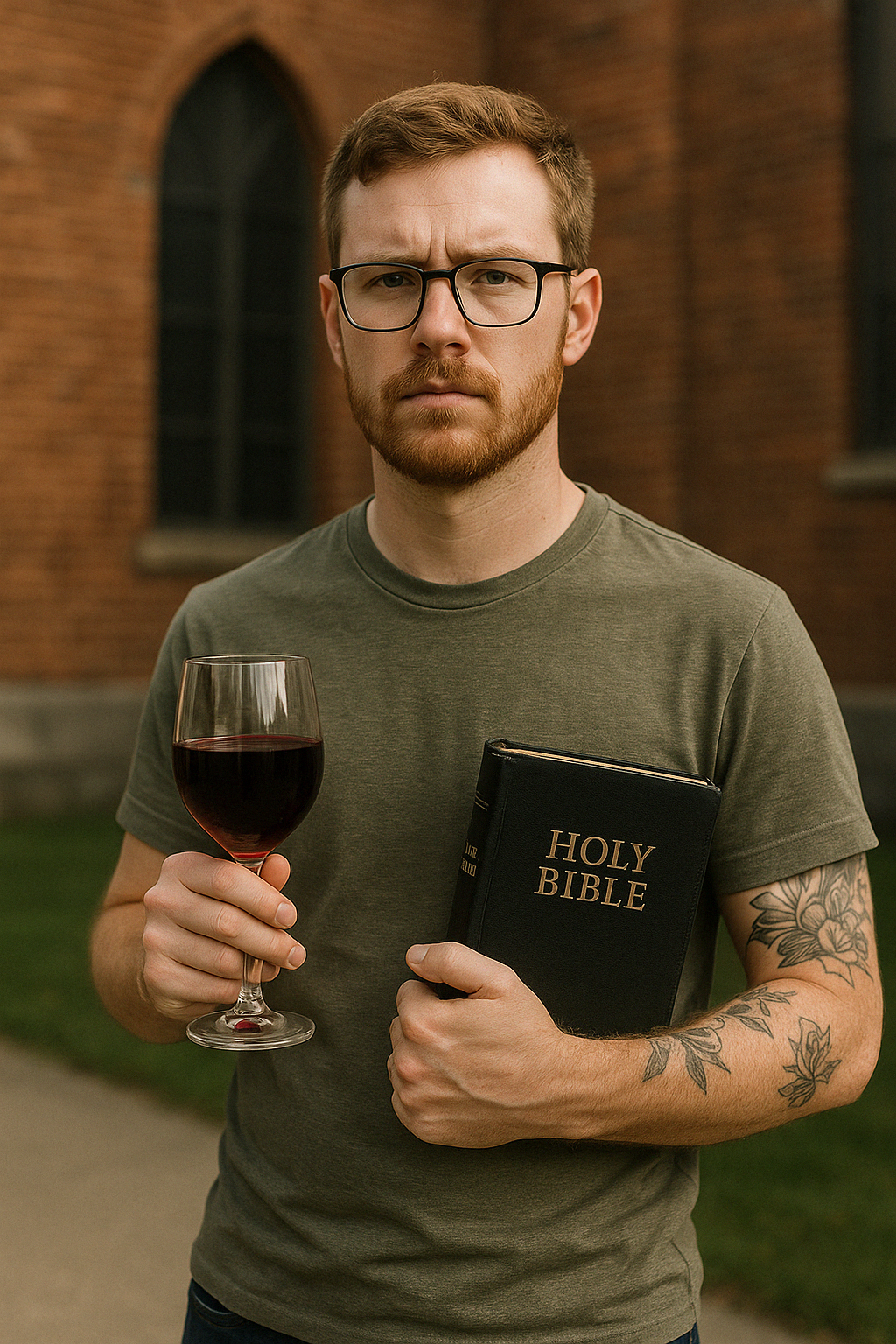
There was a time—not that long ago—when being an evangelical meant three things: no drinking, no dancing, and no playing cards that might lead to the devil’s poker table. You could spot a good evangelical by their pristine forearms (tattoo-free, thank you), their empty wine racks, and their deep suspicion of anything that smelled remotely Catholic—like liturgy, candles, or reverence.
Well, that time is over. Pour one out (yes, a real drink) for 20th-century evangelicalism. Because it’s morphing faster than a Hillsong worship set turns into a Coldplay concert.
What’s Happening?
American evangelicalism is shedding its old skin. The rules are bending, the boundaries are blurring, and the once iron-clad taboos? Gone. Vanished. Evaporated like the last vestiges of a church potluck jello salad.
Alcohol? It’s in your pastor’s fridge.
Tattoos? They’re in the pulpit.
Liturgy? That’s not just for Anglicans anymore—it’s suddenly “deep” and “meaningful,” especially when done in a dimly lit church plant with Edison bulbs.
I'm guilty of all three.
This Isn’t Just a Youth Thing
Before you blame the Gen Z TikTok theologians—don’t. This isn’t just a trendy shift driven by 23-year-olds in oversized flannel. The “loosening” isn’t confined to the young and restless. It’s cross-generational. Millennials, Gen Xers, and even boomers are done with being the Moral Majority. The vibe is now more spiritual nuance than spiritual watchdog.
In other words: Grandma’s sipping merlot and reading The Book of Common Prayer. Brace yourselves.
Why Is This Happening? Four Reasons and a Wake-Up Call
1. Culture Was Always the Real Gatekeeper
Let’s be real: a lot of evangelical “theology” was just American moralism in a Christian hat. The rules weren’t necessarily biblical—they were cultural. And now that culture has shifted, the scaffolding is falling down. We thought we were holy. Turns out we were just Southern.
2. Nobody Wants to Be the Weirdo
In today’s hyper-secular world, standing out because you don’t sip wine or have Spotify is…awkward. So evangelicals started asking: “Wait—is this actually in the Bible, or is it just some weird 1980s church youth group rule?” And the answer? Yeah, it’s mostly the latter.
3. The Death of Pastoral Authority
Once upon a time, if the pastor said it, that was it. Today? Everyone’s got a platform, a podcast, and a theological hot take. Authority has shifted from pulpits to personal brands. Welcome to the age of curated Christianity, where everyone is their own spiritual guru.
4. We’re Tired of Fighting Each Other
Tired of being known more for what we hate than who we worship, many evangelicals are adopting practices from other Christian traditions. Liturgy, silence, fasting—ancient rhythms that actually feel… grounding? Shocker: there’s more to faith than rock bands and fog machines.
Is This Good? Or Just… Inevitable?
Here’s the million-dollar question: Are we becoming more biblical or just more palatable? Are we recovering ancient, rooted practices or just blending in with a culture that thinks “authenticity” means “don’t tell me I’m wrong”?
It’s complicated. But here’s what’s clear: evangelicalism is changing. Fast. And if we don’t pause to ask why, we might end up with a faith that looks less like Jesus and more like a self-help seminar with communion wafers.
Final Thoughts: Discernment > Deconstruction
Not every tradition needs to be trashed. And not every taboo was a prison. Maybe—just maybe—we need a little less reaction and a lot more reflection. Because while Jesus turned water into wine, He also flipped tables. And knowing when to do which? That’s called wisdom.
Need help discerning the difference between gospel truth and cultural leftovers? Start with your Bible, not your Instagram feed.
Thanks for reading.


